Long-Term Optimization and Techno-Economic Assessment of Green Hydrogen Systems by BAUN Academics
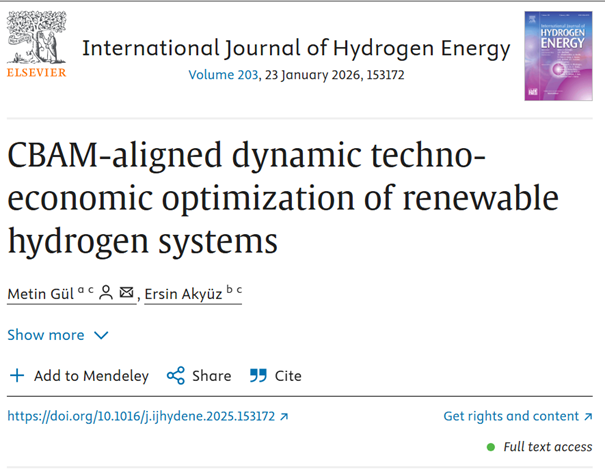
A study conducted by Assoc. Prof. Dr. Ersin Akyüz from the Department of Electrical and Electronics Engineering at the Faculty of Engineering, Balıkesir University, and Lecturer Metin Gül from the Department of Electricity and Energy at Balıkesir Vocational School presents a comprehensive optimization and techno-economic decision-support framework for PEM electrolyzer-based green hydrogen systems powered by hybrid renewable energy sources.
Titled “CBAM-Aligned Dynamic Techno-Economic Optimization of Renewable Hydrogen Systems,” the study has been published in the International Journal of Hydrogen Energy, one of the world’s leading journals in the field of energy and hydrogen technologies, indexed in SCIE and ranked in the Q1 category, making a significant contribution to the international literature.
The research adopts a long-term analytical approach for grid-connected PEM electrolyzer systems powered by photovoltaic (PV) panels and wind turbines (WT). Using real hourly electricity price signals, system sizing was carried out with the help of two independent optimization algorithms, and the analysis period was extended to a 20-year operational horizon (175,200 hours). This approach goes beyond short-term analyses by jointly evaluating dynamic net present value (NPV), system degradation, and investment performance.
Within the scope of the study, detailed sensitivity analyses were conducted on constraints in renewable energy generation, oxygen by-product pricing, taxation policies, discount rates, CAPEX reduction scenarios, and degradation rates of PV, wind turbine, and electrolyzer systems. Additionally, a holistic evaluation was achieved by incorporating water treatment and supply costs from different water sources, as well as gas and liquid hydrogen storage options.
The findings reveal that flexible operational strategies and market-interactive control approaches play a decisive role in determining the levelized cost of hydrogen (LCOH) and long-term return on investment in hybrid PV–wind-powered green hydrogen systems. With its sensitivity to policy scenarios and market conditions, the study provides a strong reference framework for planning green hydrogen investments in Türkiye and similar markets.
In this respect, the study goes beyond being a purely technical optimization analysis and offers valuable academic guidance for decision-makers in energy transition, investment planning, and the development of a sustainable hydrogen economy.
🔗 Publication link: https://doi.org/10.1016/j.ijhydene.2025.153172